
Skip to content
Bill Saver Solar — Solar Power for Warehouses & Manufacturing

Industrial & Commercial Solar

Solar Power for Warehouses & Manufacturing

Lower your operating costs with a system built for your roof, your usage and your grid connection.

Warehouses and manufacturing sites run high daytime loads but pay peak rates for power you could generate yourself. Most of that roof space sits unused. A properly sized commercial solar system—matched to your actual consumption, roof type and switchboard—cuts bills by 40–60% and pays for itself in 4–6 years. Bill Saver Solar handles site assessment, design, installation by accredited electricians and all grid paperwork.

What matters for this sector

Lower your operating costs

Warehouses and factories typically run peak loads during daylight hours when retail electricity rates are highest. A solar system sized to your daytime consumption cuts those bills by 40–60%. Once installed, operating costs are minimal—just annual monitoring app checks and occasional cleaning—so the saving compounds year after year.

Qualify for federal and state incentives

The federal Small-scale Technology Certificates (SRES) program reduces your upfront cost via STCs: the Clean Energy Regulator applies a zone multiplier to your system size, deeming years and STC price to calculate an upfront discount. State rebates and the federal Cheaper Home Batteries Program (available from 1 May 2026 onwards) may also apply. Confirm current amounts with the Clean Energy Regulator and your state energy agency, as incentive rates reset on set dates.

Protect against rising electricity prices

Work with accredited, local electricians

All Bill Saver Solar installers hold SAA accreditation and follow Australian standards (AS/NZS 4777 for grid-connected systems). We handle your site assessment, system design, installation, grid connection paperwork and monitoring setup—you deal with one business, not multiple contractors.

Process

  1. 01

    Free site assessment and quote

    Book an appointment (no charge). Our electrician inspects your roof (pitch, angle, space, shading), checks your switchboard and isolation gear, and reviews your last 12 months of electricity bills. We photograph key areas and take measurements. Within 3–5 business days, you receive a custom quote with system size, panel and inverter specs, installation timeline, GST and available incentive amounts (STCs, state rebates). No surprises.

  2. 02

    Design, permits and scheduling

    If you proceed, we finalise your system design and prepare a single-line diagram for your network operator's approval. Most distribution network operators approve within 2–4 weeks. We also arrange any council planning permits if needed (rare for commercial rooftop solar under 100 kW). Once approved, we schedule your installation with you 2–3 weeks ahead. Installation typically takes 2–5 days depending on system size and roof complexity.

  3. 03

    Installation, testing and handover

    Our team installs the racking, panels, inverter, isolators, cabling and monitoring hardware. We test all DC and AC circuits to Australian standards, fill out your compliance certificate and commission your monitoring app. On handover day, we show you how to read your app, explain the warranty documents and hand over all paperwork. Your system begins exporting to the grid immediately; you'll see bill reductions within your first month.

Questions

Common questions

Still have questions? Ask us or call 0485868633.

How big a system does a warehouses & manufacturing need?
It depends on daytime load and roof area. Interval data from your retailer gives the most accurate answer.
How long does a home solar installation take?
Most residential systems are installed in one day. Approval and grid-connection paperwork can add one to four weeks before the system is switched on.
What size solar system do I need?
Size the system to your daytime use and future plans. A typical family home suits a system that covers most of its annual usage; check your bill for daily kWh and multiply by 365.
How much does commercial solar cost for a warehouse?
A commercial solar system for warehouses and manufacturing sites typically costs $25,000 to $160,000 in AUD, depending on system size (measured in kilowatts), roof type, switchboard condition and panel brand tier. Larger facilities with good south-facing roof space and three-phase power sit at the lower end; complex installations with multiple buildings or structural work cost more. Bill Saver Solar provides a free site assessment and written quote after inspecting your roof pitch, angle, shading and switchboard. Many buyers offset upfront cost with Small-scale Technology Certificates (STCs) under the federal Small-scale Renewable Energy Scheme (SRES)—the exact amount depends on your location's zone multiplier, system size and current STC price (confirm with the Clean Energy Regulator). Several states also offer rebates; check your state energy agency for current programs.
What size solar system do I need for my warehouse?
System size depends on your average daytime power consumption, roof space and budget. A typical warehouse drawing 50 kW during operating hours might need a 40 kW system; a manufacturing site running 100 kW could need 60–80 kW. The key is matching the system to when you actually use power: if your machinery runs 6–10 hours a day, a correctly sized array generates power during those hours rather than oversizing and wasting exports. Bill Saver Solar's site assessment includes 12 months of your electricity bills, a roof inspection and a load-profile analysis to calculate the right size. This avoids both undersizing (leaving savings on the table) and oversizing (paying for unused capacity). Your electrician will also check whether your switchboard can handle the inverter capacity and whether single-phase or three-phase power affects the design.
Can I add a battery to my warehouse solar system?
Yes. A battery lets you store daytime solar generation for evening peak rates, further reducing grid imports. Warehouse sites often benefit because peak energy charges (4–9 pm) can exceed daytime feed-in rates by 50% or more, and a battery shifts that load. Battery costs range from $7,500 to $16,000 to add to an existing solar system, depending on capacity (measured in kilowatt-hours or kWh) and chemistry. If you're considering a battery now, the federal Cheaper Home Batteries Program provides rebates on battery cost: approximately $252 per kWh for the first 14 kWh, $151 per kWh from 14–28 kWh and $38 per kWh from 28–50 kWh (2026 rates; confirm current amounts with the Department of Climate Change, Energy, Environment and Water). Battery payback typically takes 5–10 years depending on your local electricity rates and usage pattern. Bill Saver Solar can model your bill savings before you buy.
What paperwork is needed to connect commercial solar to the grid?
Your solar system must be registered with your state's distribution network operator (which varies by postcode: Energex in Queensland, Essential Energy or Endeavour Energy in New South Wales, Powercor or United Energy in Victoria, etc.). The network operator requires an application form signed by an SAA-accredited electrician, proof that your inverter meets Australian standards (AS/NZS 4777), and a single-line diagram of your system. If your system exports more than 10 kW, the network operator may ask for additional protection settings or require your inverter to comply with advanced functionality like voltage ride-through. Bill Saver Solar's electricians handle all this paperwork; you don't need to submit anything yourself. Once the network operator approves (typically 2–4 weeks), your system is connected and eligible for STCs and grid exports. The approval letter must be kept for warranty and insurance claims.
Do commercial solar panels need regular cleaning?
In dusty, industrial or rural areas, yes—panels lose 10–25% of output if covered in dust, pollen or bird droppings. Coastal sites suffer salt deposit buildup. Most warehouses benefit from cleaning every 6–12 months; manufacturing sites with heavy emissions (e.g. cement dust, metal fines) may need quarterly cleaning. Bill Saver Solar offers solar panel cleaning for $150–$450 depending on system size and roof access. A single clean after a dry season often pays for itself within weeks through recovered energy generation. Rooftop positioning and tilt angle also affect debris accumulation: flat roofs collect more dust than pitched roofs. We recommend inspecting your system's monitoring app for any unexplained drop in output, which usually signals a cleaning opportunity.
What warranty and maintenance does commercial solar include?
Panels typically come with a 25–30 year performance guarantee (they degrade slowly, usually 0.5–0.8% per year); inverters carry a 5–10 year manufacturer warranty; batteries carry 5–15 years depending on chemistry and brand. Bill Saver Solar includes 10 years of workmanship warranty on all installation labour. After year 1, most systems need no maintenance; however, a professional service every 2–3 years (checking inverter health, DC isolators, cabling and monitoring) costs $180–$1,200 and can catch issues early. If your inverter fails, replacement costs $1,500–$4,200 and usually takes 1–2 weeks once parts arrive. Keeping records of all maintenance and repairs protects your warranty claim and helps resale value if you sell the property. Check your policy document and contact Bill Saver Solar before any work to avoid voiding the warranty.
Can I use commercial solar and an EV charger together?
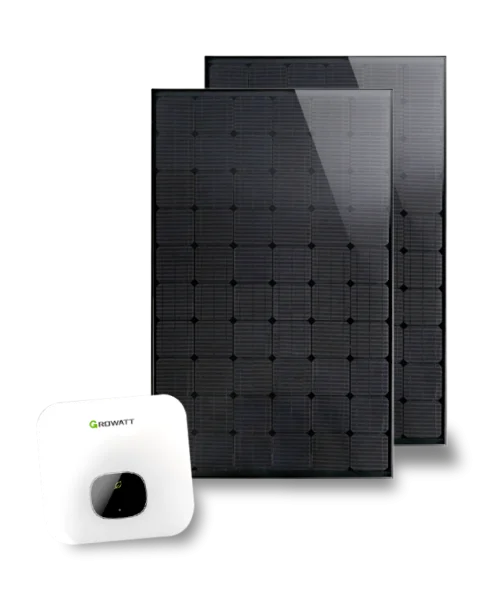
Yes. Pairing solar with an EV charger for company vehicles works well: you charge fleet vehicles with your own renewable power during the day, cutting fuel costs and emissions. An EV charger installation typically costs $1,200–$3,200 depending on whether your switchboard has spare capacity and whether you need extra cabling or trenching. The charger can be wired to prioritise solar power (some smart chargers do this automatically), so on sunny days, vehicles charge for free. If you have a battery, the charger can also pull from stored energy in the evening. Bill Saver Solar can assess whether your solar system size suits your vehicle fleet and recommend charger specs (7 kW or 11 kW are common for small warehouses; larger sites may need 22 kW or higher). This combination qualifies for different rebates in some states—check your state energy agency for current EV charger incentives.
solar — final

Ready to cut warehouse energy costs?

Get my free quotes →

Book a free site assessment and custom quote. Our electricians will inspect your roof, analyse your bills and design a system for your exact load.

Services for business

Solar Battery InstallationSolar + Battery PackagesAdd a Battery to Existing SolarCommercial Solar

Other industries

Farms & AgricultureRetail & HospitalitySchools & ChildcareMedical & Dental ClinicsStrata & Apartment Buildings

Costs & finance

Solar & Battery RebatesSolar Finance & Repayment Calculator

Call Get a free quote →
Tap to call